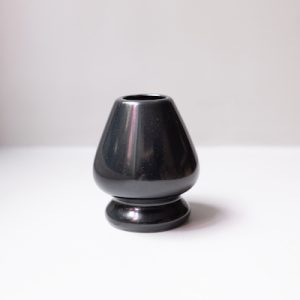
Matcha kit

Price range: €99.00 through €99.70

The Matcha Kit is an invitation to explore the Japanese tea ritual and discover to discover theyūgen aesthetic moment in a cup.

The set consists of Master Osada-san okumidori matcha in a metal box, a bamboo chashaku spoon, a chasen whisk and a handmade matcha matchawan cup by ceramicist Beatričė Kelerienė.

For more information on how to make matcha tea.

The set is packed in a gift box and can be decorated with a cotton ribbon.

The Matcha Set is the perfect way to take the matcha tea experience to the next level, while experiencing the aesthetics of yūgen and the ritual of Japanese tea. The kit contains the essentials for traditional matcha preparation at home.

In the set you will find

Master Osada-san okumidori matcha tea
Grown naturally, matcha tea from the okumidori vesle bush has a vibrant colour and a smooth, creamy flavour with hints of peas. Master Osada-san pays great attention to clean tea cultivation. As the master himself says, being an organic farmer has led to a greater interest in and understanding of the tea plant, and this journey of discovery has allowed him to be more adventurous in experimenting and creating the best possible flavours.

Handmade matcha cup – chawan by Beatričė Kelerienė.
The ceramicist is an internationally renowned artist who has studied traditional ceramics in Japan and other parts of the world for more than two decades. Her work has won top awards in prestigious Japanese competitions including Kyoto and Mino. She works with wood-fired blast kiln firing techniques, resulting in one-off ceramic pieces with a unique character.

Bamboo spoon – chasaku
Traditional bamboo spoon for dispensing matcha tea. The spoon is used to scoop about 1 g of matcha tea powder.

Bamboo whisk – chasen
The whisk is for whisking matcha tea. Using a bamboo whisk allows you to achieve the best matcha result – evenly whipped tea with a light layer of matcha foam that adds sweetness and even more creaminess to the drink. The whisk has 80 bristles.


Preparing matcha tea

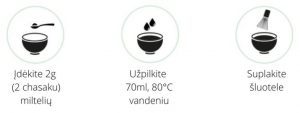
  1. Prepare the chasen whisk for use – leave the chasen whisk in hot water for 1-2 minutes
  2. Add 2 g. matcha tea (2 chasaku shakes) to the cup
  3. Add a little water at 70 degrees Celsius and, using a bamboo whisk, mix the powder with the water in light movements until smooth
  4. Add the remaining water and whisk the tea until it forms a foam of normal consistency.

For more information on how to make matcha tea.


This matcha set invites you to slow down and enjoy a calming ritual that fits easily into your daily routine.
Master of Tea

The Osada family is one of Japan’s leaders in organic tea, not only nurturing their own tea fields, but also bringing together more than 30 organic tea farms in Shizuoka Prefecture for 30 years. The Osada family buys the farmer’s ‘aracha’ tea from their cultivated fields and small family farms. The tea from the different farms remains unmixed and is individually brewed to maintain its unique taste and the highest quality.

When asked what motivated him to set up an organic farm, he replied that it was his family’s and other farmers’ desire to drink natural tea, eat natural vegetables and drink unpolluted mountain river water. As the master himself says, being an organic farmer has led to a greater interest in and understanding of the tea plant, and this journey of discovery has allowed him to be more adventurous in experimenting and creating the best possible flavours.

Beatričė Kelerienė

Since 2003 he has been studying and researching traditional ceramics and ceramic kiln technology in Japan, in Tanba, Shigaraki, Echizen, Tokoname, Seto, Tajimi, Kutani, Hagi, Hagi, Mino and Bizen, the oldest cities in Japan. I have also developed my experience in other parts of the world, including Guatemala, Korea, the Dominican Republic and Mexico.

In 2008, he founded a ceramics studio in Misato, Japan. At the same time, he lived in Lithuania for part of the time, where he studied the local ceramic traditions. In 2010 he was granted the status of Artist.

Her work has been recognised in Japan’s most prestigious ceramics competitions. Among them are wins in the Toki 2014 and Tanabe 2013 competitions. She was awarded a personal prize by the Governor of Kyoto at the Kyoto 2014 exhibition. Received a special award at Mino 2014, one of the most famous international ceramic competitions in Japan.

In 2014, he founded the Anagama Ceramic Art Centre in Vilnius district, Dūkste area and built the 5-meter long blast furnace Karmazinai Anagama. Anagama firing is complex, expensive and requires special craftsmanship, but the works created in this way are valued as a distinct, separate category of ceramics. In 2024, a second blast furnace was built, the Dūkšta Anagama. The opportunity to create high-temperature wood-fired ceramics gives Beatrice great joy and creative freedom.

A guide to making tea

The taste of tea in our cup is determined by the following factors:

Preparation method:

Various tea making techniques and methods are available according to individual needs. Yugen Tea is recommended to be prepared in a matchawan (bowl):

matcha making guide

About matcha and its preparation in the Lithuanian Radio&Television programme “Good morning, Lithuania” (“Labas rytas, Lietuva”).

How to choose the right tea making utensils.

Tea quality: The quality of the tea leaves is not only determined by the final result of the artisan, but also by the suppliers and the conditions under which the tea is stored. Green Japanese tea is particularly sensitive to the environment, therefore, the recommended consumption time of this tea is quite short. To extend the expiration date, an unopened green tea package can be stored in a refrigerator. After opening the package, it is recommended to store the tea in a sun-proof package or airtight container in a cool place, as far away from moisture and odours as possible.

Water quality: Water makes up 99% of the contents of our cup of tea, so its quality is just as important as the tea itself. The most suitable water for the tea is soft and as close as possible to neutral pH, with a low mineral content (50-100 mg/l). Usually, tap water in Lithuania is heavy, therefore, for best possible results, you should choose filtered or spring water. During boiling, water loses oxygen, thus it is recommended to never boil the same water more than once.

Tea

Taste: Rich flavour, creamy texture with pea notes
Aroma: Freshly cut grass
Tea colour: Bright green grass
Ingredients: Green tea
Place of origin: Shizuoka, Japan

* Product appearance may slightly differ from the product photo.


Reviews

There are no reviews yet

Show only reviews in English (0)

Be the first to review “Matcha kit”

Your email address will not be published. Required fields are marked *

You may also like…